Homework First, Then the Joysticks: The Teen Crews Quietly Running America's Arcades
The 3 P.M. Shift Nobody Talks About
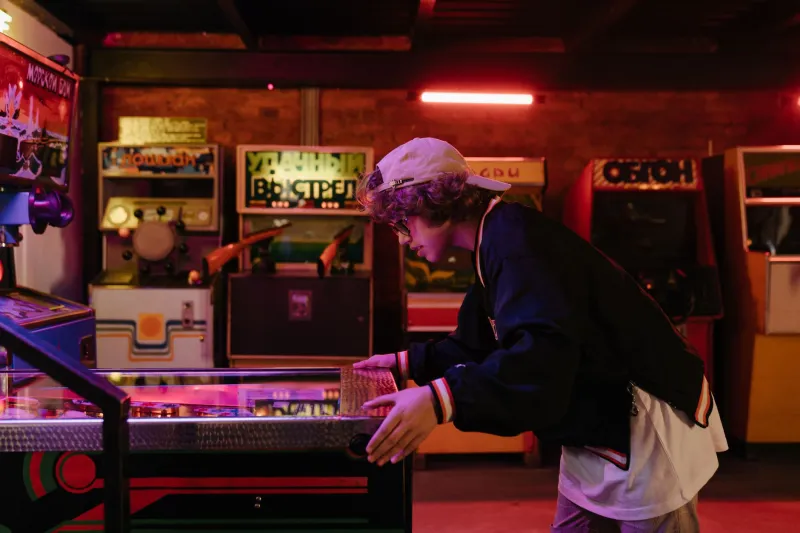
Walk into a well-run arcade in Ohio, Oregon, or Georgia at around three in the afternoon, and you'll notice something the owners rarely mention in interviews: the person restocking prize tickets, wiping down the Mortal Kombat cabinet, and arguing with a customer about a stuck quarter is probably seventeen.
Arcades were supposed to be dead by now. Instead, they're experiencing a genuine revival — and a big part of that revival runs on teenage labor. Not just cheap labor, either. These kids are the ones running tournament brackets, filming TikToks that actually go viral, diagnosing CRT issues their bosses have never heard of, and posting the high-score updates that keep regulars coming back.
From Customer to Core Staff
The pipeline is remarkably consistent from coast to coast. A kid shows up because of a birthday party or a Fortnite field trip, gets obsessed with a single machine — usually something from the '80s or '90s that predates their parents' marriage — and starts hanging around so much the owner eventually just hands them a lanyard.
That's roughly how it went for a high school junior we'll call Maya, who started as a regular at a suburban arcade outside Columbus and now runs its entire social media presence. Her Friday night event clips have pulled more foot traffic than the shop's paid ads ever did. The owner's marketing budget, by her own admission, is essentially Maya's phone and a bag of gas-station snacks.
Multiply that story across a few thousand arcades, and you start to see the pattern: Gen Z isn't just the customer base driving the retro revival. They're the operational backbone of it.
What These Kids Actually Do
The job description at a typical family-owned arcade is gloriously unglamorous, and teenagers do most of it:
- Machine maintenance — vacuuming dust out of cabinets, replacing buttons and microswitches, learning soldering from YouTube tutorials
- Event operations — running brackets for Smash and Street Fighter nights, managing check-ins, keeping prize budgets honest
- Content creation — the arcade's Instagram, TikTok, and Discord almost always belong to the youngest person on staff
- Community management — knowing every regular by name, mediating disputes over turn-jacking, keeping the vibe welcoming for first-timers
None of this appears on a payroll spreadsheet as "community management," but it's the difference between an arcade that survives and one that becomes another sad "closed for renovations" storefront.
Why Owners Trust Them With the Keys
There's a practical logic here. Arcade owners tend to be passionate hobbyists who are great at restoring cabinets and less great at Instagram. Teenagers are the inverse — fluent in the platforms where new customers actually come from, and increasingly literate in the retro tech their bosses love.
There's also a trust dynamic. Arcade owners are, almost by definition, people who bet their livelihoods on a business everyone told them was dead. They're not looking for a résumé; they're looking for someone who cares. And a kid who voluntarily spends four afternoons a week practicing Pac-Man patterns is showing you exactly that.
The Pay Problem Nobody Loves
It would be dishonest to paint this as pure wholesome entrepreneurship. Most of these gigs pay minimum wage or hover around volunteer status, trading shifts for free play credits and leftover pizza. Labor advocates would call that exploitative, and in some cases they'd be right.
But the teens we hear about frame it differently: this is the apprenticeship model, minus the paperwork. Kids learn bookkeeping from the owner's QuickBooks, event logistics from tournament nights, and hardware repair from a 1981 cabinet that refuses to die. Several have parlayed it into real careers — one former arcade kid in Texas now runs esports operations for a mid-sized venue company; another repairs pinball machines professionally.
The Future Is Already Clocking In
Here's the thing about the arcade business: it has always survived on true believers. The quarter-munching golden age ended, the crash came, the home console era nearly finished the job — and arcades persisted because a small number of people refused to let go.
The difference now is that the true believers are sixteen, they have 40,000 followers, and they're fixing a wiring harness between classes. The business once thought to be dying has quietly handed its future to a generation that grew up on screens but craves something physical, local, and shared.
So next time you're at your local arcade and the tournament starts on time, the machines are clean, and the clip of that insane double-perfect finish is already online — look behind the counter. There's a good chance the whole operation is being held together by a teenager with a lanyard, a Discord server, and absolutely no plans to leave.