When the Machine Learns to Play Back: AI Is Quietly Rewriting the Rules of Arcade Game Design
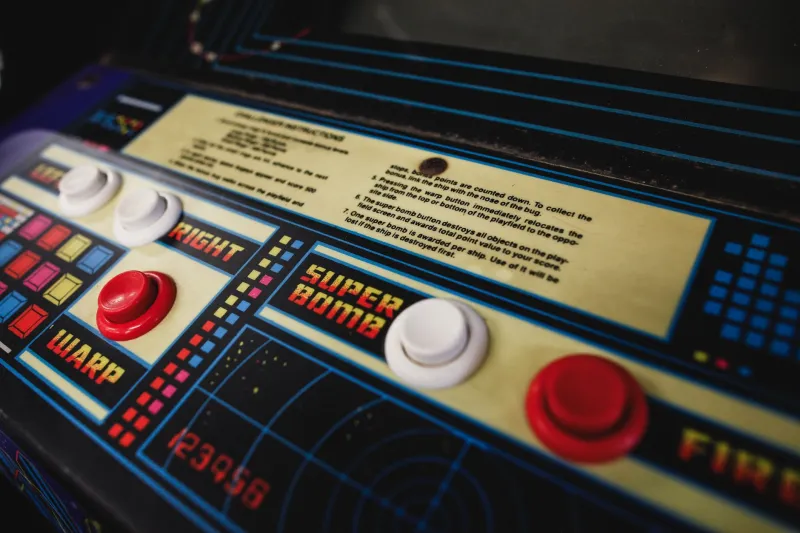
There's a moment every arcade player knows. You've lost five times in a row. Your palms are damp. The cabinet is eating your quarters like it has a personal grudge. And yet — you reach into your pocket for one more.
That moment was never an accident. Classic arcade designers engineered it deliberately, tuning difficulty curves by hand, obsessing over the exact frame where frustration tips into obsession. It was craft disguised as chaos.
Now, machines are doing that tuning themselves. And the results are stranger — and more fascinating — than most players realize.
The Algorithm Behind the Curtain
Modern arcade development has quietly absorbed tools from the broader tech world, and machine learning sits near the top of that list. Dynamic difficulty adjustment — the practice of having a game respond to how well or poorly you're performing in real time — isn't new. Older console titles dabbled in it for years. But the versions showing up in contemporary arcade hardware are considerably more sophisticated.
Rather than simply cranking enemy speed up or down based on a win/loss ratio, newer systems analyze behavioral data: how long a player hesitates before a jump, which attack patterns they consistently dodge versus which ones catch them off guard, even how their reaction times shift over the course of a single session. The game isn't just watching your score. It's watching you.
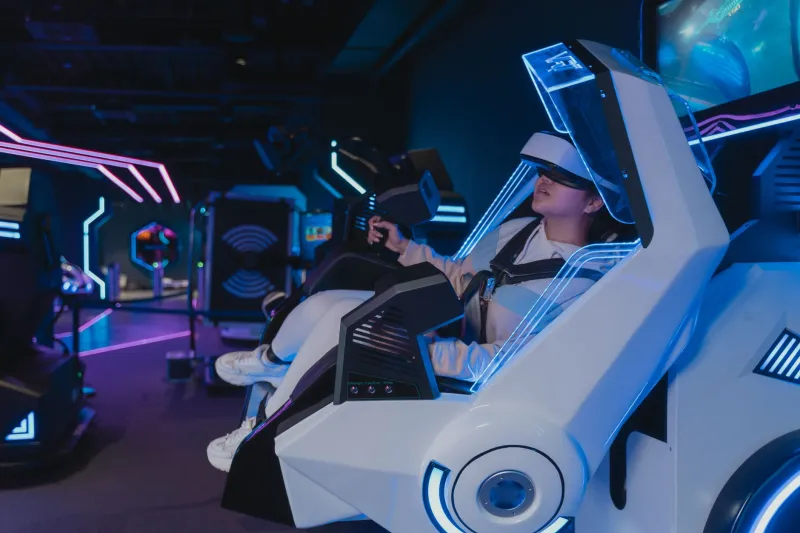
Game developers working on location-based entertainment — the industry term for arcade and experiential gaming venues — describe this as moving from static design to "responsive design." The game isn't a fixed obstacle course anymore. It's closer to a sparring partner that studies your habits.
Keeping Veterans in the Room
One of the persistent headaches for arcade operators has always been the skill gap. A first-timer and a ten-year veteran standing next to each other at identical cabinets have almost nothing in common as players. Designing for both simultaneously used to be close to impossible. You either built a game that challenged the expert and crushed the newcomer, or you softened it enough for beginners and bored everyone else within twenty minutes.
Procedural content generation — where AI systems build level layouts, enemy configurations, and environmental hazards on the fly rather than pulling from a fixed library — is changing that math. The idea is that no two sessions play exactly alike, which means even a player who's logged hundreds of hours can't fully memorize their way to victory.
For operators, that has real business implications. A machine that stays genuinely challenging for skilled players is a machine those players return to. Repeat visits are the economic backbone of any arcade floor, and anything that extends the lifespan of a cabinet's appeal is worth serious attention.
What Researchers Are Actually Saying
The conversation happening in AI research circles around game design is a little more cautious than the marketing language surrounding it. Reinforcement learning — where an AI model improves by playing a game millions of times and learning from outcomes — has produced some genuinely remarkable results in controlled environments. But translating that into a fun, balanced experience for a human player standing at a physical cabinet is a different problem entirely.
The challenge researchers point to is that "fun" isn't a clean variable. Players don't want to win every time. They also don't want to lose every time. They want to feel like they almost won — and that the gap between where they are and where they need to be is crossable with effort. That psychological sweet spot, sometimes called "flow state" in cognitive research, is notoriously difficult to engineer consistently. Humans who've spent careers making games still get it wrong regularly.
Asking an algorithm to hit that target across wildly different player types, on a loud arcade floor, in sessions that might last ninety seconds or twenty minutes, is a genuinely hard ask. Progress is real, but the researchers involved tend to describe it as early days rather than a solved problem.
The Operator's Perspective
Talk to the people actually running arcades and the enthusiasm for AI tools tends to be practical rather than philosophical. Operators care about uptime, revenue per square foot, and player retention. If a smarter cabinet keeps people engaged longer and reduces the friction of the learning curve for new players, that's a compelling pitch regardless of how the technology works under the hood.
What some operators flag, though, is a risk of over-optimization. The rough edges of classic arcade games weren't bugs — they were features. The brutal, sometimes unfair difficulty of a vintage cabinet created stories. You'd walk away from a machine and tell someone about it. That narrative quality, the sense that the game had a personality and that personality was kind of mean, is part of what built loyalty.
A system that smooths every rough edge in the name of optimal engagement might produce better average session times while quietly erasing the thing that made players actually love the machine. It's a tension that good designers are aware of, even if there's no clean answer yet.
The Human Element Isn't Going Anywhere
Here's what's easy to miss in conversations about AI and arcade design: the technology isn't replacing designers. It's giving them a new instrument. The developers most excited about machine learning tools tend to describe them as a way to handle the tedious calibration work — balancing numbers, stress-testing edge cases — so human designers can spend more time on the parts that actually require taste.
The sound design that makes a hit feel satisfying. The visual feedback that makes a near-miss feel almost good rather than just bad. The moment of spectacle that makes the person next to you lean over to watch. Those things still come from people who understand what it feels like to be a player, not from a model that's optimized a reward function.
At 125520 Arcade, we've watched this industry reinvent itself more than once. The shift from purely mechanical games to digital ones. The jump from dedicated hardware to software-driven cabinets. Each time, the people who worried that the soul of arcade gaming would get lost in the transition turned out to be partially right and mostly wrong. Something changed. Something also survived.
AI is probably the same story. The algorithm will get better at finding the edge of your frustration and pulling you back. But the reason you reach into your pocket for one more quarter — that's still yours.