Bleeps, Bloops, and Brain Chemistry: Why Arcade Sound Design Still Hits Different
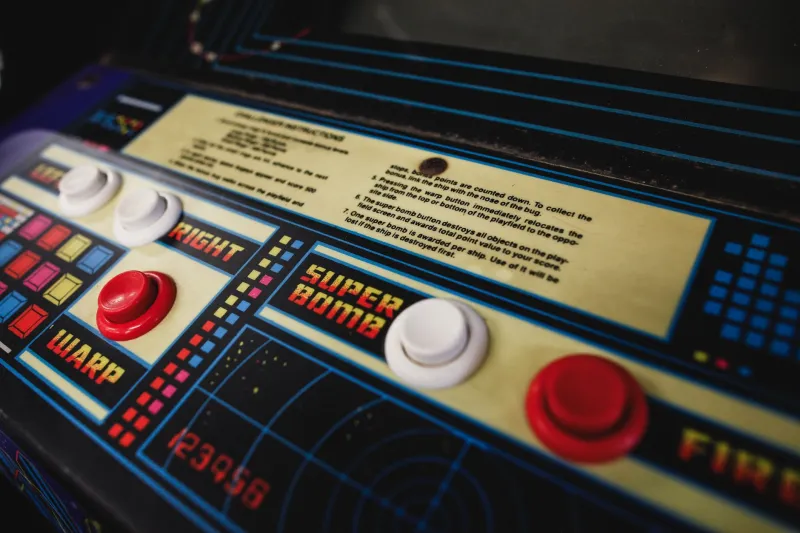
Close your eyes for a second. Someone plays four descending notes — duh-duh-duh-DUM — and your entire body knows exactly what game that is. You haven't set foot inside an arcade in maybe twenty years. You're standing in a grocery store checkout line. Doesn't matter. That sound owns a piece of your nervous system, and it's not letting go.
That's not nostalgia doing party tricks. According to audio engineers and cognitive researchers who've spent real time studying the phenomenon, the sonic fingerprints burned into classic arcade hardware operate on a fundamentally different psychological frequency than anything being produced today. The reasons why are stranger — and more fascinating — than most players ever stop to consider.
Working With Almost Nothing
Here's the technical reality that makes classic arcade audio so remarkable: the machines that produced the most recognizable sounds in gaming history were working with hardware constraints that modern developers would consider laughable. Early arcade boards had dedicated sound chips — the AY-3-8910, the Yamaha YM2151, the legendary Ricoh 2A03 — that could generate only a handful of simultaneous audio channels. We're talking three to five voices, tops. No samples. No orchestras. No surround sound.
What those limitations forced designers to do was prioritize ruthlessly. Every single sound had to carry maximum informational weight. The coin-insert chime wasn't decorative — it was a psychological handshake, a promise that the transaction was real and the game was yours now. The death sound wasn't just feedback — it was an emotional gut-punch calibrated to sting just enough to make you want to try again immediately.
"When you only have three channels and maybe 4 kilobytes of ROM space for all your audio," says one veteran sound designer who's worked on both coin-op restorations and modern indie titles, "every beep is a deliberate decision. Nothing gets in by accident. That intentionality is baked into the waveform itself."
The Ear Remembers What the Eye Forgets
There's solid neuroscience backing up what arcade veterans have always felt in their gut. Auditory memory — the brain's capacity to store and retrieve sound — is handled largely by the hippocampus and auditory cortex, the same regions involved in emotional processing and long-term memory consolidation. Sounds that arrive during moments of high arousal (say, the split second before a game-ending collision) get encoded with unusual intensity.
Arcade environments were basically arousal machines. Flashing lights, competitive pressure, public performance anxiety, the physical act of standing at a cabinet with strangers watching — all of it cranked the emotional stakes up before a single quarter dropped. The sounds that played inside that context got stamped into memory with a force that a comfortable couch-gaming session in a quiet living room simply can't replicate.
This is why grown adults who haven't thought about Pac-Man in a decade will still flinch-smile when they hear that opening jingle. The memory isn't just auditory. It's somatic. It lives in the body.
The Chip-Tune Paradox
Here's where things get genuinely weird for audio engineers working in contemporary game development. Modern games have access to full orchestral recordings, spatial audio processing, Dolby Atmos mixing, and essentially unlimited sonic palettes. The budgets for AAA game soundtracks now rival Hollywood film scores. And yet — ask any group of gamers to hum a memorable audio cue from a game released in the last five years. Watch the silence that follows.
"I think about this constantly," admits an indie game composer who asked to remain anonymous because they still do contract work for major studios. "We have every tool imaginable, and somehow we're less memorable. The constraint was the feature. The limitation forced a kind of sonic branding that you just can't manufacture when you have infinite options."
The chip-tune paradox is real and it's reshaping how some developers approach audio. A growing number of indie studios — particularly those operating in the retro-revival space — are deliberately choosing to work within artificial constraints. They'll cap themselves to four audio channels. They'll reject sample-based instruments in favor of synthesized waveforms. Not because they can't afford better, but because they understand that the fence is what made the garden.
The Frequency of Memory
Audio researchers have noted something specific about the waveforms chip-based hardware naturally produced. Square waves and triangle waves — the building blocks of classic chip-tune audio — have a harmonic simplicity that sits unusually well in human auditory processing. They're easy for the brain to pattern-match and store. They don't compete with ambient noise the way complex orchestral arrangements do. In a loud arcade environment, a simple square-wave melody cut through the chaos with almost surgical precision.
Modern game audio, by contrast, is often mixed for headphone or home theater environments. It's rich, layered, and immersive — and it disappears into the background the moment you're not actively listening for it. Classic arcade audio was designed to grab you from across a room. Those are completely different design goals, and they produce completely different neurological results.
Why It Still Matters Right Now
For anyone paying attention to gaming culture in 2024, the resurgence of interest in arcade audio isn't just a retro nostalgia trip. It's showing up in unexpected places. Chip-tune artists are selling out venues in major US cities. Indie games built around lo-fi audio aesthetics are consistently outperforming expectations. Brands outside gaming have started licensing classic arcade sound effects specifically because research shows they trigger unusually positive emotional responses in adults aged 30 to 55 — a demographic with serious purchasing power.
The arcade operators who've been running barcades and retro gaming venues across the country have noticed something similar. When they play original cabinet audio through the room rather than piping in background music, dwell time goes up. People linger. They get that faraway look. The sounds are doing something to them that no playlist algorithm has figured out how to replicate.
The Sound Was Always the Point
Maybe the most honest way to frame it is this: classic arcade machines were, at their core, attention-capture devices operating in brutally competitive physical spaces. Every design decision — screen brightness, cabinet art, control layout, and especially audio — was engineered to pull a human being across a room and keep them there. Sound designers working under those conditions weren't making art for its own sake. They were solving a survival problem with whatever scraps of hardware they had.
The fact that those solutions turned out to be neurologically sticky, emotionally resonant, and culturally durable across four decades? That's the accidental genius of constraint. The machines had almost nothing to work with, and they made something that lives forever.
Next time you hear that coin-drop chime and feel something move in your chest, you're not being sentimental. You're experiencing the end result of some seriously clever engineering — the kind that didn't know it was being clever, which is usually the best kind.