Craft Cocktails, VR Headsets, and Retro Vibes: The Arcade Business Model Has Been Completely Rebuilt
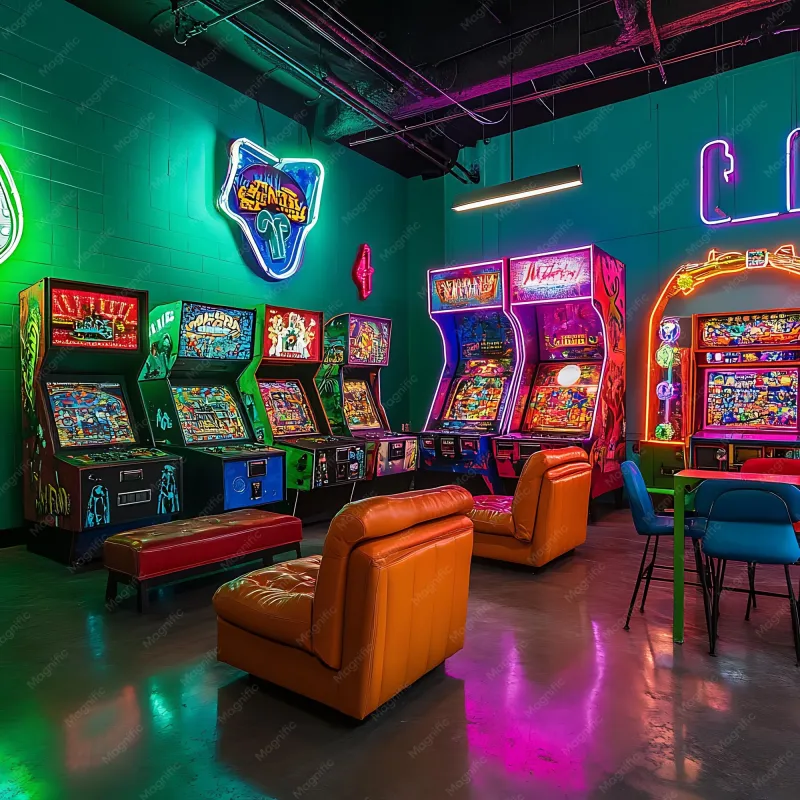
Photo: modern barcade interior neon lights craft cocktails arcade games, via img.freepik.com
Walk into a modern destination arcade in any mid-size American city and you're probably not going to find a sticky carpet, a change machine that jams every third transaction, and a teenager hogging the Mortal Kombat cabinet for three hours on one quarter. What you're more likely to find is a carefully lit space with exposed brick, a full cocktail menu featuring locally sourced spirits, a mix of lovingly restored vintage machines and brand-new VR pods, and a line out the door on Friday nights.
The arcade business has been rebuilt almost from scratch — and the people doing the rebuilding are thinking less like arcade operators and more like hospitality entrepreneurs.
The Death and Rebirth of a Business Model
To understand where arcades are going, you have to understand what killed the original model. The home console revolution of the mid-'90s didn't just give people an alternative to arcades — it fundamentally undercut the core value proposition. Why spend quarters at a machine in public when you could play the same (or better) games at home for free, in your underwear, with snacks?
The operators who survived that shakeout did so by finding niches the living room couldn't replicate: ticket redemption games, large-format experiences like racing simulators, and social settings that made gaming feel like a group activity rather than a solo hobby. Dave & Buster's essentially wrote the playbook for the modern entertainment arcade, combining food, drinks, and a curated game floor into something that felt like a night out rather than a trip to the game room.
What's happened over the past decade is a kind of artisanal evolution of that model — smaller, more personality-driven venues that borrow from the barcade concept but push it further in terms of design, curation, and experience.
The Barcade Blueprint — and Its Limitations
The barcade format — vintage arcade games plus a full bar — was genuinely innovative when it first emerged in the mid-2000s. Brooklyn's Barcade, which opened in 2004, is often credited as the prototype, and the concept spread rapidly through urban markets hungry for nostalgic novelty with an adult twist.
But by the early 2020s, the basic barcade had become almost generic. There are only so many ways to arrange a row of Galaga machines and a craft beer tap list before the formula starts feeling stale. Operators who opened in the early barcade wave found themselves competing against newer venues that had absorbed the format and pushed past it.
The response from the most forward-thinking operators has been to layer in additional dimensions of experience. Themed environments. Rotating game selections. Private event spaces. VR experiences that don't require you to own a $500 headset. Escape room integrations. Full sit-down dining instead of just bar snacks. The goal is to give people a reason to stay longer, spend more, and come back with different groups — date night, birthday party, corporate event, family afternoon.
The Instagram Factor Is Real (But It's Not the Whole Story)
Ask any modern arcade operator about design and they'll acknowledge the social media dimension without embarrassment. A visually striking space generates organic content — guests post their own photos and videos, which drives awareness among their followers, which drives foot traffic. It's a marketing channel that didn't exist twenty years ago, and ignoring it would be leaving serious value on the table.
Neon signage, carefully considered color palettes, retro-futuristic aesthetic details, photo-friendly game setups — these aren't accidents. They're deliberate design choices made with the understanding that the experience extends beyond the four walls of the venue.
But operators are quick to point out that Instagram-bait alone doesn't sustain a business. People might come once for the aesthetic, but they come back for the actual experience. Game selection matters. Staff culture matters. The quality of the bar program matters. Venues that over-invest in looks and under-invest in substance tend to have a burst of initial buzz followed by a slow fade.
VR: Promise vs. Reality
Virtual reality has been the perennial "next big thing" in location-based entertainment for years now, and the honest assessment from operators is mixed. High-end VR experiences — multi-player arena setups, motion-platform simulators, free-roam experiences — can be genuine draws when they're executed well and maintained properly. The problem is that the hardware is expensive, the content library is still limited, and the experiences require significant floor space and staff attention to operate safely.
Several operators have scaled back their VR footprints after finding that the revenue per square foot didn't justify the investment and operational complexity. Others have doubled down, particularly on premium experiences that justify a higher price point than traditional arcade games. The venues making VR work tend to treat it as a premium tier within the overall experience rather than a replacement for the core game floor.
The Revenue Model Has Shifted Dramatically
Here's something that surprises a lot of people: for many modern destination arcades, games aren't the primary revenue driver anymore. Food and beverage — particularly alcohol — often carries a bigger share of the revenue mix. That shift has profound implications for how venues are designed, staffed, and operated.
It means hiring people who know hospitality, not just gaming. It means investing in a real kitchen or at least a serious bar program. It means thinking carefully about table service flow and ensuring that the game floor and the dining/drinking areas work together rather than competing for space. The best modern arcades feel cohesive — the games and the hospitality reinforce each other rather than existing in parallel universes under the same roof.
Private event revenue has also become a major piece of the puzzle. Birthday parties, corporate team-building events, and bachelorette parties are high-margin business that modern arcade venues are uniquely positioned to capture. The combination of games (inherently social and competitive), food and drinks, and a visually interesting environment makes for an event venue that feels distinct from the usual bar or restaurant.
Is This Genuine Innovation or Just Novelty?
That's the question worth sitting with. Some of what's happening in the modern arcade space is genuinely innovative — new ways of using technology, new approaches to hospitality, new models for community building around gaming culture. Some of it is novelty wrapped in good lighting.
The operators who seem most likely to build durable businesses are the ones who are honest about that distinction. They're investing in things that create real loyalty — game libraries that stay fresh, staff who actually love gaming, community events that bring regulars back — rather than just chasing the next aesthetic trend.
At 125520 Arcade, we've always believed the best gaming experiences are the ones that keep you coming back. Whether that's a single great machine or an entire venue built around the idea of play, the core impulse is the same. These new-era arcades, at their best, are honoring that impulse — just with better cocktails.