Insert Coin, Collect Returns: When Arcade Machines Became Investment Assets
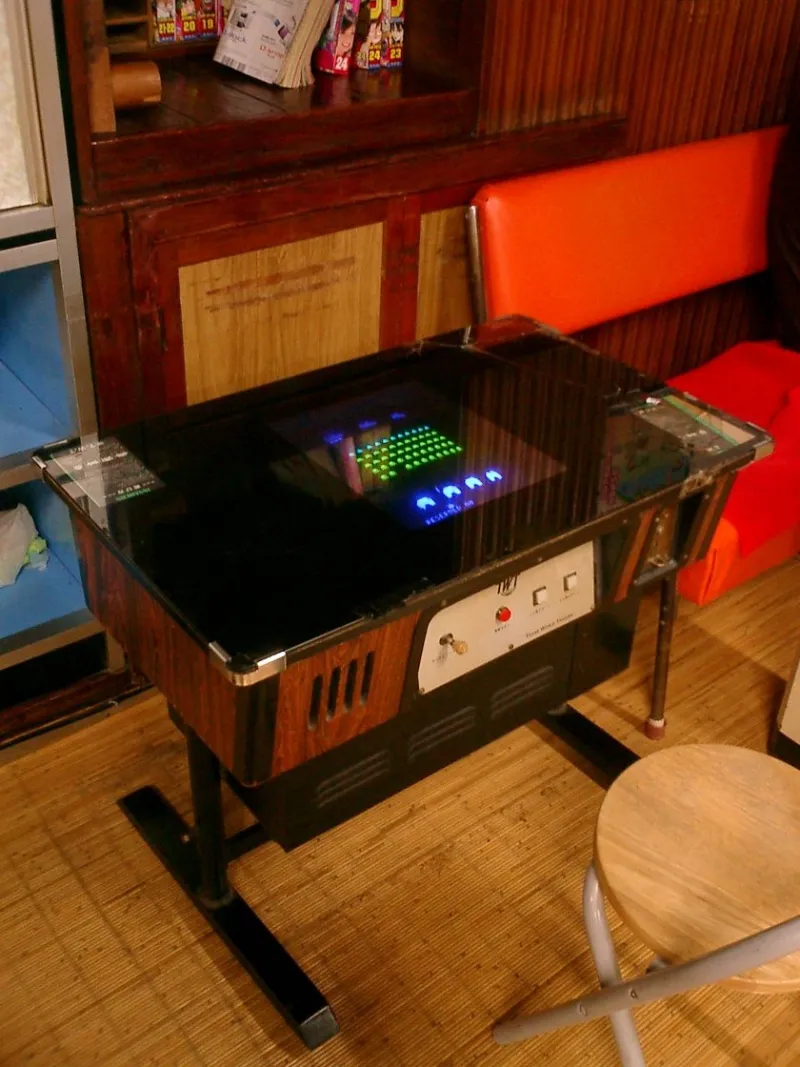
Photo: Tomomarusan, CC BY 2.5, via Wikimedia Commons
A Pac-Man Cabinet Worth More Than Your Car
Somewhere in a climate-controlled storage unit in suburban New Jersey, a 1980 Pac-Man cabinet in original condition sits wrapped in moving blankets. Its owner, a former commodities trader named Elliot Marsh, checks on it roughly once a month. He's turned down three offers for it in the past two years. The most recent was for $14,000.
"People think I'm crazy," Marsh says, laughing. "But I've watched this thing appreciate faster than half the stocks I traded professionally. At this point, it's not a game. It's an asset."
This is the part of arcade culture that doesn't show up in the nostalgia documentaries or the retro gaming YouTube channels. Behind the warm glow of CRT screens and the cheerful sound of quarters hitting coin doors, there's a surprisingly sophisticated — and sometimes cutthroat — investment market. Arcade machines, rare cartridges, and original promotional materials have quietly become speculative assets, drawing in everyone from nostalgic collectors to cold-eyed entrepreneurs who've never touched a joystick in their lives.
From Hobbyist to Portfolio Manager
The shift from "collector" to "investor" didn't happen overnight. For most of the 1990s and early 2000s, buying old arcade machines was a hobbyist pursuit — people wanted to own the games they loved as kids, and prices were low enough that it barely registered as a financial decision. A decent Donkey Kong cabinet might run you a few hundred dollars at an estate sale. Nobody was building spreadsheets.
Then a few things happened in quick succession. The internet connected collectors nationally, creating transparent pricing for the first time. Heritage Auctions and other major houses started accepting video games as legitimate collectibles. And in 2021, a sealed copy of Super Mario Bros. sold for $2 million, making international headlines and signaling to the broader market that gaming memorabilia was serious money.
Arcade machines followed a similar trajectory, if slightly slower. The most desirable titles — original Donkey Kong units, early Pac-Man cabinets, rare cocktail table versions of beloved games — started climbing past the five-figure mark. Certain ultra-rare machines, like working prototypes or limited regional releases, entered the territory of fine art pricing.
"The market went from 'this is a fun hobby' to 'this is an alternative asset class' in about five years," says Dana Whitfield, who runs an arcade restoration shop in Phoenix and has watched the shift firsthand. "And with that came all the stuff you'd expect: speculation, fraud, price manipulation, people who don't care about games at all buying them as investments."
The Authentication Problem
With serious money comes serious fraud, and the arcade investment world has a significant authenticity problem.
Unlike fine art, where provenance documentation has centuries of established practice, arcade machines were never built with resale in mind. Boards get swapped, cabinets get repainted, original parts get replaced. A machine that looks original might have only 30% of its factory components. The line between "restored" and "fake" is genuinely blurry, and sellers don't always disclose which side they're on.
Cartridge authentication has its own drama. The Video Game History Foundation and various grading services like WATA Games have tried to bring standardization to the market, but WATA itself became embroiled in controversy when it emerged that some high-profile early sales — the ones that drove mainstream attention to the market — involved parties with undisclosed financial relationships. The fallout cooled the cartridge market noticeably, though prices have since partially recovered.
For arcade cabinets specifically, there's no equivalent of a grading service. Buyers largely rely on reputation, photos, and in-person inspection. That puts enormous power in the hands of established dealers and creates a trust economy that newcomers navigate at their own risk.
"I've seen machines sold as all-original that had reproduction side art, a replacement monitor, and a rebuilt power supply," says restoration specialist Whitfield. "Technically it plays the same. But to a collector, that's the difference between a $3,000 machine and a $12,000 machine."
What Actually Drives Value
Not every arcade machine is an investment. The market is ruthlessly selective, and understanding what drives value is the difference between a smart purchase and an expensive mistake.
Rarity is the obvious factor, but it interacts with nostalgia in complicated ways. A game can be objectively rare and still command modest prices if nobody particularly remembers or cares about it. The most valuable machines tend to be titles that sit at the intersection of cultural significance, limited surviving units, and broad name recognition — Donkey Kong, Pac-Man, Galaga, and a handful of others consistently anchor the top of the market.
Condition is critical in ways that go beyond aesthetics. Original CRT monitors in working order add substantial value because modern replacements, while functional, break the authenticity chain. Original control panels, unrestored side art, and factory-matching hardware all command premiums. A machine that was "professionally restored" is often worth less to a serious collector than one that's beat-up but untouched.
Provenance matters more than it used to. A machine with documented history — especially one tied to a famous location, a notable player, or a verified competition — can trade at multiples of its base value. One Donkey Kong cabinet with documented connection to the early competitive scene sold for nearly three times the going rate for comparable units simply because of its story.
Is This a Bubble?
The question every serious player in this market is asking — usually quietly, over a beer at a collector meetup — is whether any of this is sustainable.
The honest answer is: some of it is, and some of it definitely isn't.
The top tier of the market — the rarest machines, the most culturally significant titles, the pieces with verified provenance — has real scarcity underpinning its value. There will never be more original Pac-Man cabinets in the world. That's a genuine constraint on supply. Demand from wealthy nostalgic buyers and institutional collectors provides a floor.
The middle market is shakier. Mid-tier machines that appreciated dramatically during the pandemic-era collectibles boom are already showing price softness. Buyers who got in at peak 2021 pricing on "good but not great" cabinets are discovering that liquidity is limited when sentiment shifts.
"I tell people the same thing I'd tell them about any alternative asset," says Marsh, the former commodities trader. "The top 5% of the market is real. The rest is vibes and momentum. Buy what you love and can afford to hold. Don't buy on leverage and don't expect a quick flip."
For the arcade entrepreneurs treating cabinets like stock portfolios, that's sobering advice. But for the collectors who got into this because they genuinely love the games — the ones who remember what it felt like to stand in front of a machine with a single quarter and everything on the line — the financial calculus was never really the point anyway.
The money is just a side effect of the magic.