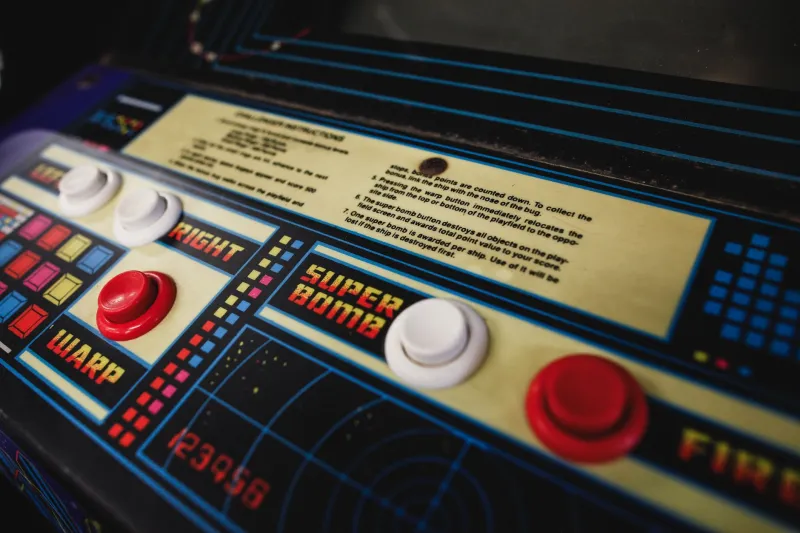
Soldering Dreams: How a New Breed of DIY Builders Is Reinventing the Arcade Cabinet From the Ground Up
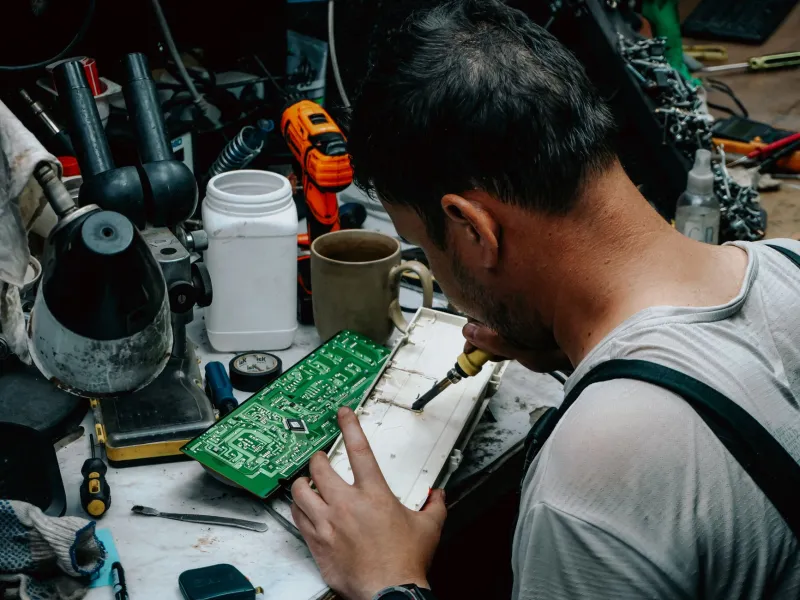
Somewhere in suburban Ohio, a software engineer named Marcus has spent the last fourteen months converting a corner of his two-car garage into something between a fabrication shop and a shrine. There's a CNC router along one wall, rolls of custom vinyl artwork stacked against the other, and on the workbench — surrounded by component bags, solder wire, and empty energy drink cans — sits the skeleton of an arcade cabinet that doesn't quite exist yet.
It's going to run an FPGA board. The marquee art is original. The joystick is a custom-machined reproduction of a 1984 Happ Controls unit. And when it's done, nobody will be able to buy one like it anywhere on Earth.
Marcus is part of a quietly exploding subculture that's been building momentum for years in forums, Discord servers, and maker spaces across the US. These are the DIY arcade cabinet builders — and they're doing something that commercial manufacturers and traditional preservationists haven't quite figured out how to respond to.
The Hybrid Machine Problem
Here's the tension at the center of this whole scene: a "real" arcade cabinet, in the purest collector sense, is a specific artifact. It has original PCB hardware, original artwork, original controls — a timestamp frozen in amber. Mess with any of that and some corners of the preservation community will politely (or not so politely) tell you what you've built isn't authentic.
But the DIY builders aren't really interested in that argument. What they're building is something different — machines that borrow the form factor and aesthetic DNA of classic cabinets while running hardware that would've seemed like science fiction to the engineers who built the originals.
FPGA-based boards are a big part of this. Unlike software emulation running on a general-purpose processor, FPGA emulation recreates the actual logic circuits of original hardware at the silicon level. The result is timing accuracy that traditional emulators struggle to match. Builders who care obsessively about the feel of a 1987 shoot-em-up — the exact pixel timing, the precise audio sample playback — are treating FPGA boards as the only acceptable solution. Projects like MiSTer FPGA have become almost standard-issue in this community, a kind of baseline hardware layer that serious builders take for granted.
Stack that on top of custom PCBs designed for specific control layouts, hand-wired LED setups, and bespoke monitor configurations, and you end up with something that looks like the past and performs like the present.
The Artwork Problem (And Why It's Actually the Fun Part)
If the hardware side of this hobby has a learning curve measured in months, the artwork side has one measured in arguments. Original cabinet artwork from the golden age of arcades is genuinely iconic — those side panel illustrations and marquee graphics were often the first thing a kid saw across a dark arcade floor. Getting that look right matters enormously to the builders who care about aesthetics.
Some commission original artists who specialize in the retro arcade style. Others work directly with graphic designers to recreate or reimagine classic prints using period-accurate color palettes and typography. A few are doing something more interesting still — creating entirely fictional arcade games with original artwork for machines that never existed commercially, essentially building cultural artifacts for games that live only in their imagination and their cabinet.
The vinyl printing and application process alone is its own craft. Bubbles, alignment, edge wrapping — builders in community forums debate substrate choices and laminate finishes with the kind of intensity usually reserved for things that actually matter to the outside world.
Who These People Are
The community skews toward people with technical backgrounds — engineers, developers, makers — but that's not a hard rule. What they share is a tolerance for frustration and a specific kind of patience that lets someone spend six weekends debugging a control panel wiring harness without losing interest.
Age range is wide. There are folks in their fifties recreating the machines they fed quarters into as teenagers, and there are people in their mid-twenties who grew up entirely on consoles but got pulled into arcade culture through YouTube rabbit holes and ended up here, soldering iron in hand, wondering how that happened.
The social layer of this hobby is genuinely warm. Forums like the BYOAC (Build Your Own Arcade Controls) community have been active for years and carry a culture of patient explanation and shared problem-solving. Discord servers dedicated to specific hardware platforms fill up with people posting progress photos at midnight. There's something almost therapeutic about the combination of physical craft and technical problem-solving that seems to attract a certain personality type — people who want their obsession to produce an object they can actually stand in front of.
Where This Puts Commercial Manufacturers
The major commercial players in the home arcade space — your Arcade1Up cabinets and similar products — occupy a different market entirely. They're selling convenience and nostalgia at a price point that makes sense for someone who wants an arcade machine in their living room without learning to use a router. That's a legitimate product for a legitimate customer.
But the DIY builders are solving a different problem. They're after something that commercial manufacturers structurally can't provide: exactly the machine they want, built exactly the way they want it, with no compromises on hardware accuracy or aesthetic choices. No commercial product can compete with that because no commercial product can read a specific person's mind.
Some builders have started selling machines — not at scale, but as one-off commissions. A few have turned this into side businesses that blur the line between hobbyist and boutique manufacturer. The machines command serious prices, sometimes well into four figures, because the labor involved is genuinely substantial and the results are genuinely unique.
The Preservation Argument, Revisited
Here's where it gets philosophically interesting. Traditional arcade preservation is about maintaining original hardware — keeping specific machines alive in their original form, circuit boards and all. That work is important and the people doing it are providing a real service to history.
But the DIY hybrid builders are making a different argument, even if they don't always articulate it this way: that arcade culture is a living thing, not a museum exhibit. That the soul of an arcade cabinet is the experience it creates — the feel of a good joystick, the sound of accurate audio hardware, the glow of a properly calibrated CRT or a modern display dialed in to match one — and that this experience can be honored and extended by people willing to put in the work.
Marcus in Ohio would probably agree with that, though he'd phrase it differently. He'd probably just say he wanted to play the games the way they were supposed to feel, and nobody was going to sell him that, so he built it himself.
Which, honestly, sounds pretty arcade to us.