These Arcade Games Existed. Then They Didn't. Hunters Are Still Looking.

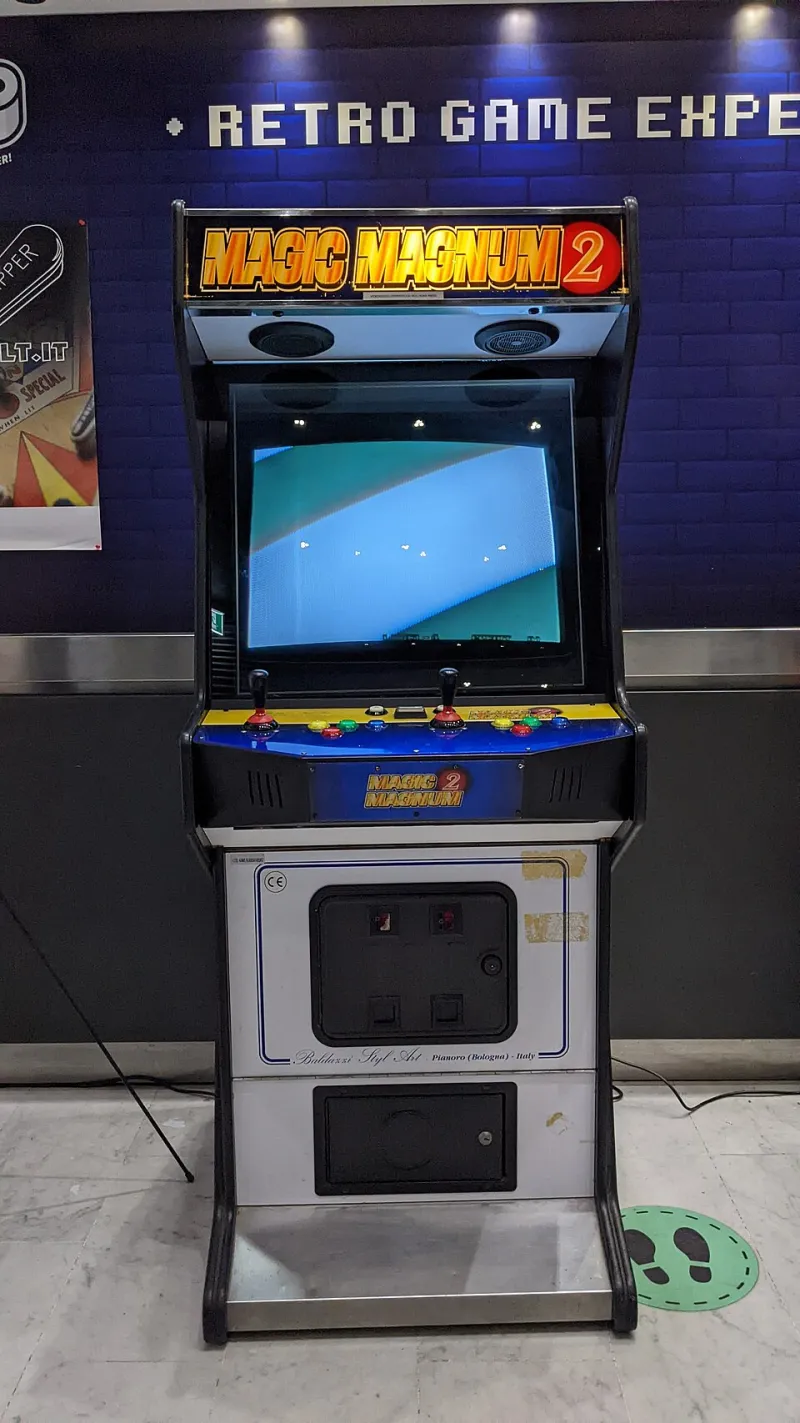
Photo: dusty vintage arcade cabinet dark storage warehouse, via thumbs.dreamstime.com
Somewhere in a storage unit in rural Ohio, there may be a circuit board that proves a game existed. A game that hundreds of kids pumped quarters into at a Midwestern mall in 1983. A game that nobody — not the internet, not the collectors, not the historians — can fully verify today.
This is the strange, slightly haunting corner of arcade culture that most people never think about. Not the classics. Not the Pac-Men and Donkey Kongs that get the nostalgia treatment every other week. The other games. The ones that flickered to life, got played, and then vanished so thoroughly that even finding a screenshot feels like archaeology.
The Memory Problem
Here's the thing about arcade games from the late '70s through the early '90s: a lot of them were never properly documented. No press releases. No marketing budgets. No Wikipedia pages. A smaller manufacturer might produce a few hundred cabinets, ship them out to regional distributors, and call it a day. If the game didn't catch fire commercially, the company moved on — or folded entirely.
What's left behind is human memory. And human memory, as anyone who's tried to describe a childhood game to a search engine knows, is deeply unreliable.
"The descriptions people give are almost poetic in how vague they are," says one longtime arcade archivist who runs a preservation-focused forum and asked to be identified only by his handle, CoinSlot_Actual. "You'll get someone saying they remember a game where you shot things from a spaceship and the background was mostly blue. That describes about four hundred games."
And yet, those vague descriptions are sometimes the only evidence that a game existed at all.
Why Games Disappeared So Completely
The reasons a game can fall off the historical record entirely are more mundane than you'd expect. Small companies in the arcade boom era weren't thinking about legacy. They were thinking about cash flow. When a cabinet stopped earning, operators sold it, stripped it for parts, or literally threw it in a dumpster. The software — stored on ROMs that were proprietary and unprotected by any preservation effort — went with it.
Licensing complications accelerated the erasure. A game built around a movie or TV property might get yanked from circulation the moment a contract lapsed. The manufacturer had no incentive to archive it. The licensor certainly didn't care. The cabinets got repurposed or destroyed, and the game became a legal ghost — something nobody was technically allowed to reproduce even if they'd wanted to.
Fire and flood did the rest. A surprising number of small arcade manufacturers operated out of warehouses and light industrial spaces. When those buildings burned or flooded — and plenty did — prototype boards, design documents, and master ROMs went with them. No backup. No redundancy. Just gone.
The Hunters
The people chasing these ghosts are a specific breed of obsessive. They haunt estate sales and storage unit auctions. They post in forums with titles like "Anyone else remember a game from around 1986 where you played as a frog on a motorcycle?" They cross-reference old trade show catalogs from AMOA conventions, squinting at black-and-white photos of exhibition floors for cabinet shapes that match a description.
The MAME preservation project — which has digitized thousands of arcade ROMs over the decades — maintains a list of games that are documented in some form but for which no working ROM has ever been found. It's a sobering list. Games with names, sometimes even with cabinet photos, that exist in legal and historical limbo because the actual software is nowhere to be found.
CoinSlot_Actual describes the hunt as "equal parts detective work and grief counseling." He's helped confirm the existence of three previously undocumented titles in the last five years, using a combination of old trade publications, interviews with former arcade operators, and — in one case — tracking down a retired programmer who'd worked at the manufacturer and still had notes.
"That one was genuinely emotional," he says. "This guy had been carrying around the memory of this game he helped build for thirty years, and nobody had ever asked him about it. He cried a little. I'm not ashamed to say I did too."
The Internet Giveth (Slowly)
For all the damage time has done to arcade preservation, the internet is quietly staging a rescue operation. Old arcade photos uploaded to Flickr and Facebook groups — the kind of background-of-a-birthday-party shots where a cabinet is half-visible in the corner — have become legitimate research tools. Someone will post a photo from 1987, and within hours a forum thread is dissecting the partially visible marquee on a machine three rows back.
Reddit communities dedicated to identifying lost games have become surprisingly effective. The format — someone posts a description, the hive mind iterates — works well for this particular problem. Collective memory turns out to be more reliable than individual memory, especially when you have enough people pulling in the same direction.
YouTube has helped too. Footage from old TV segments, local news pieces about arcades, and even home videos occasionally surface with previously undocumented games running in the background. One notable find in recent years came from a 1984 home video of a kid's birthday party at a regional arcade chain — the footage captured about four seconds of gameplay from a cabinet that hadn't been seen or documented in decades.
Four seconds. That's what passes for a breakthrough in this world.
What It Means That We Lost These Things
There's a philosophical dimension to all of this that goes beyond collector obsession. Arcade games were a genuine American cultural artifact — a form of interactive entertainment that shaped how a generation understood play, competition, and reward. Losing pieces of that history isn't trivial. It's like losing films, or music, or books.
The gaming psychology angle here is real: people who remember these lost games aren't just chasing nostalgia. They're chasing proof of an experience. When something you remember vividly has no verifiable existence, it creates a low-grade cognitive dissonance. The hunt isn't just about the game — it's about validating the memory itself.
"People need to know they didn't imagine it," CoinSlot_Actual says. "That's the real thing we're doing here. We're telling people: yes, that was real. You were there. It happened."
At 125520 Arcade, we think about games as more than entertainment — they're markers of time and identity. The ones that vanished without a trace are, in their own strange way, the most powerful reminder of that. They existed long enough to lodge themselves in someone's memory. That has to count for something.
The search continues. And somewhere, in a storage unit or a retired programmer's attic or a four-second home video nobody's uploaded yet, the proof is probably still out there.