Proof or It Didn’t Happen: The Exacting World of Arcade High-Score Verification
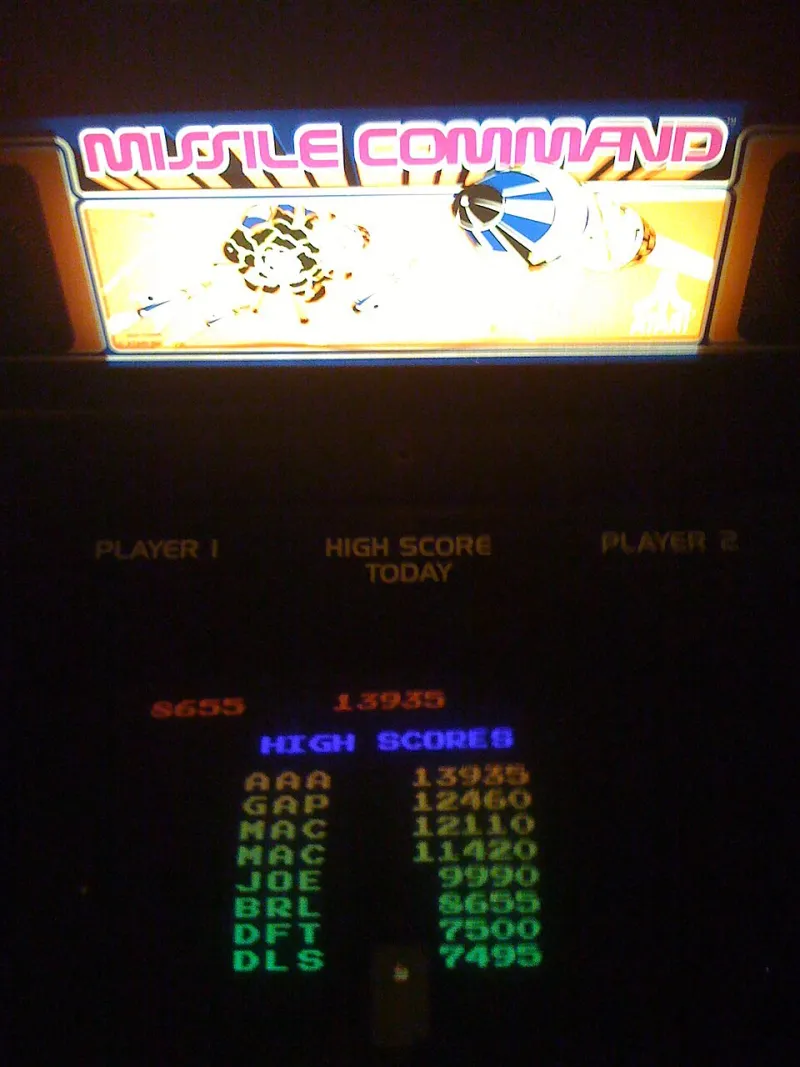
Photo: Brett L. from San Francisco, California, USA, CC BY-SA 2.0, via Wikimedia Commons
At 125520 Arcade, we have a soft spot for exact numbers. A score of 1,234,560 is satisfying in the same way a clean URL is satisfying: it looks final. But in the arcade world, a number is not a fact until somebody can prove it. That is where high-score verification comes in — a small, stubborn, mostly volunteer corner of gaming that treats a run of Donkey Kong or Galaga less like a flex and more like a case file.
In 2026, posting a screenshot is easy. Proving that screenshot came from an unmodified machine, played by human hands, on a real board, in a real arcade, is not. The people who care about that difference are fewer than you would think. They are also more necessary than ever.
A Score Is a Claim, Not a Fact
Modern games log everything. Arcade games mostly do not. A cabinet can be unplugged, a board can be swapped, a CRT can be replaced, and the machine itself rarely keeps a trustworthy record of who did what. A high score is therefore a claim about an event. Verification is the process of deciding whether that claim is strong enough to survive people who have nothing better to do than zoom in on a reflection in the bezel.
The old model — one central scoreboard, one official referee — has fragmented. In 2026, verification is spread across community boards, Discord servers, live-stream archives, event organizers, and a handful of people who have become de facto judges because they are willing to watch six hours of grainy footage and ask unpleasant questions. Twin Galaxies still exists in the broader history of arcade recordkeeping, but the center of gravity is now plural. That is good for access and bad for consistency. It also means the burden of proof sits squarely on the player.
The Referee’s Job Is Mostly Saying No
A verification referee is not a fan with a clipboard. The job is closer to insurance adjusting. They ask for the boring stuff: unbroken footage, a clear view of the screen and controls, machine serial numbers, board photos, dip-switch settings, and witnesses who are not your roommate. They want to know whether the recording is continuous, whether the audio matches the action, whether the machine was running original hardware or an emulator, and whether the player’s hands ever left the controls in a way that suggests a save state or a turbo button.
Most submissions are not cheats. Most are just incomplete. A player records the screen but not the controls. A witness signs an affidavit but cannot remember the date. A stream drops for eleven seconds during the best run of the night. The referee says no, or not yet, and the player learns that the score was the easy part. The paperwork is the boss fight.
Cheating Is a Design Problem
Arcade cheating is not always dramatic. It can be a MAME build with save states, a spliced video, a hidden emulator inside a cabinet, a modified board, a turbo controller, or a machine with a settings menu that quietly changes the difficulty. Verification people think in terms of attack surfaces: what could be faked, what could be misremembered, and what could be true but unprovable.
That is why serious submissions often include multiple camera angles, a live stream, a visible timer, a shot of the cabinet’s interior, and a referee who knows the game well enough to spot impossible patterns. It is not that every player is suspected of fraud. It is that a scoreboard without evidence is just a guestbook.
When a Legend Falls Apart
A challenged score usually follows a dull sequence: a thread, a timestamp, a request for the original file, a second look at a reflection, a question about the machine’s serial number, a witness who suddenly cannot be reached. Sometimes the score survives with an asterisk. Sometimes it is removed. Sometimes the community splits into people who trust the process and people who trust the player.
The emotional part is not the number. It is the identity. A high-score run can take years, and a verification dispute can make those years feel like a court case. The referee is not trying to erase the player’s effort. The referee is trying to protect the only thing that makes a scoreboard worth reading: the assumption that the numbers mean something.
Why the Exact Number Still Matters
In an age of streaming, cloud saves, and automated leaderboards, arcade verification can look like nostalgia with a clipboard. But the appeal is precisely that it is awkward and physical. The run happened on a machine in a room with sticky carpet and bad lighting. A human being watched it and decided it was real. That is a different kind of record.
At 125520 Arcade, the number in our name is a hook, not a proof. The real 125,520-style obsession is the idea that exactness has value. A verified arcade score is not just a big number. It is a small public argument that the past can be checked. If you post a score, show your work. The club is tiny, but the door has a camera on it.