Likes Won't Save Your Local Arcade — But Some Owners Are Finding Ways to Fight Back
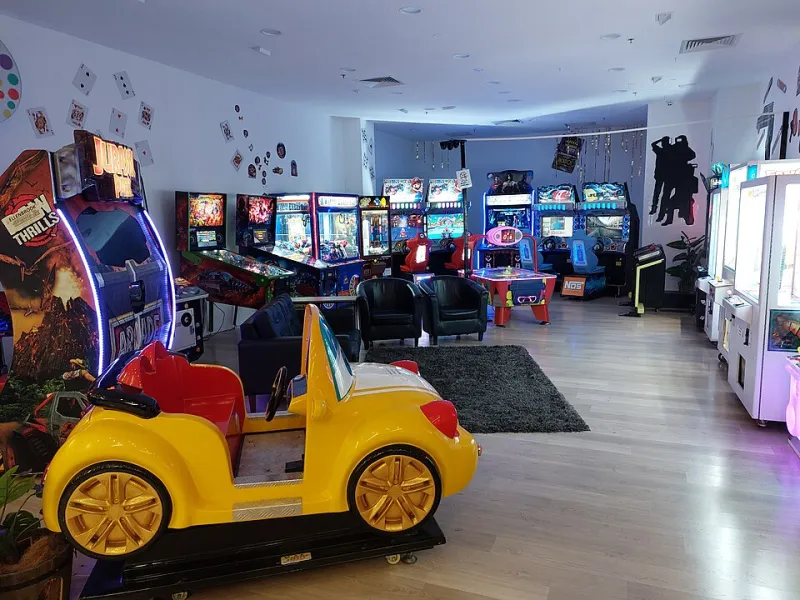
Photo: Orderinchaos, CC BY-SA 4.0, via Wikimedia Commons
There's a specific kind of silence that arcade owners dread. Not the quiet of a slow Tuesday afternoon — that's manageable. It's the silence of a Saturday night when the parking lot should be packed but isn't, because everyone's home watching someone else play games on their phone.
That's the reality a lot of independent game room operators are sitting with right now. The competition isn't the arcade across town anymore. It's TikTok. It's YouTube. It's a hundred free-to-play mobile titles engineered by teams of behavioral scientists to keep thumbs tapping and eyes glazed. Against that kind of machine, a row of Street Fighter cabinets and a prize counter full of stuffed animals can feel pretty outgunned.
But here's the thing — some arcades are not just surviving this moment. They're genuinely thriving. And the ones doing it well have figured out something counterintuitive: you can't beat the algorithm by ignoring it.
What the Algorithm Actually Did to the Arcade
Let's be honest about what happened. The social media era didn't just steal eyeballs from arcades — it fundamentally rewired how Americans seek out entertainment and community. Platforms like TikTok and Instagram serve up dopamine on demand, personalized to individual tastes, available anywhere with a signal. The communal arcade experience — showing up, waiting your turn, watching strangers get bodied on Mortal Kombat — requires friction. You have to leave your house. You have to interact with people you didn't pre-select.
For a generation raised on curated feeds, that friction can feel like a lot to ask.
Mobile gaming made things worse. When every pocket holds a device capable of running visually stunning games, the graphical novelty that once made arcade cabinets jaw-dropping just doesn't land the same way. Kids who grew up with iPads aren't necessarily wowed by a 32-inch CRT anymore.
The result? Foot traffic at standalone arcades across the US has been uneven at best, brutal at worst, particularly for venues that haven't updated their model since the early 2000s.
The Operators Who Decided to Get Weird About It
Meet the owners who stopped mourning the old model and started experimenting.
In Columbus, Ohio, the team behind a mid-sized barcade called Token & Tap made a deliberate decision two years ago: they would treat their Discord server as seriously as their physical floor. They built out channels for local competitive players, ran weekly trivia nights that blended in-person attendance with live streams, and started seeding their online community with insider content — early looks at new cabinet arrivals, polls about which games to keep or rotate out, shoutouts to regulars.
"We stopped thinking of Discord as a marketing tool and started treating it like a neighborhood," said the venue's co-owner. "People show up in real life because they already feel like they belong here before they walk in."
The results weren't overnight, but they were real. Their Thursday night retro tournaments, promoted almost entirely through Discord and Instagram Stories, now regularly sell out. More importantly, the regulars recruit new players themselves — exactly the kind of organic growth no ad budget can manufacture.
Instagram Challenges and the IRL Pull
Over in Austin, a venue called Pixel Alley leaned hard into Instagram's visual culture rather than fighting it. Their strategy? Make the arcade itself photogenic enough to become content.
They redesigned their entrance corridor with neon-lit cabinet displays specifically engineered for vertical video. They launched a monthly "High Score Wall" challenge — players post their best scores with a branded hashtag for a chance to win free play credits. The challenge generated thousands of tagged posts and, more critically, brought curious first-timers through the door who'd seen a friend's story and wanted to see the place for themselves.
"We realized we weren't competing with people's phones," the owner explained. "We were giving people a reason to pick their phone up and show their friends something real."
It's a subtle but important reframe. Rather than positioning the arcade as an escape from screens, they positioned it as something worth putting on your screen — a physical experience with enough personality and visual texture to earn a spot in someone's feed.
Events as the Actual Product
If there's a single throughline connecting the arcades that are holding their own right now, it's this: they've stopped selling games and started selling events.
The cabinet is no longer the draw on its own. The draw is the tournament bracket, the costume contest, the charity gaming marathon, the speed-run competition with a local prize pool. These are experiences that can't be replicated on a phone, can't be streamed from your couch, and — crucially — generate their own social media content naturally because people want to share them.
A venue in Chicago started hosting monthly "Arcade Fight Nights" modeled loosely on local esports events, complete with brackets, commentary, and a small crowd of spectators. They stream it live on Twitch, but the in-person energy is the actual product. The stream serves as advertising for the next event, not a replacement for showing up.
"The algorithm is always going to win at being the algorithm," the owner said. "We can't out-content TikTok. But TikTok can't give you the feeling of beating someone in the same room while twenty people watch. That's ours."
What's Still Broken
None of this is a magic fix, and it'd be dishonest to pretend otherwise. The arcades winning right now tend to be in cities with enough population density to support a niche community. Rural and small-town operators face steeper climbs. The investment required to redesign a space for social media aesthetics, build an online community, and run consistent events is significant — in time more than money, often.
And there's an exhaustion factor. Running a Discord server, posting Instagram Reels, coordinating weekly events, and still managing the actual physical business is a lot for a small operation. The venues succeeding are often ones where at least one person on the team genuinely enjoys community-building, not just game-running.
The Bigger Picture
What the most resilient arcades seem to understand is that they're not really in the games business anymore — or at least, not only in the games business. They're in the community business. The cabinets are the medium. The feeling of belonging to something local and real is the actual product.
In a media landscape where every algorithm is optimized to keep you isolated and scrolling, a loud room full of strangers yelling at a screen together is a genuinely radical offering. The arcades figuring that out aren't just surviving the TikTok era. They're making a pretty compelling argument that some things are worth leaving the house for.
The coin might be digital now. The community still has to be real.