Eight Seconds to Earn a Quarter: The Forgotten Genius of the Arcade Attract Mode
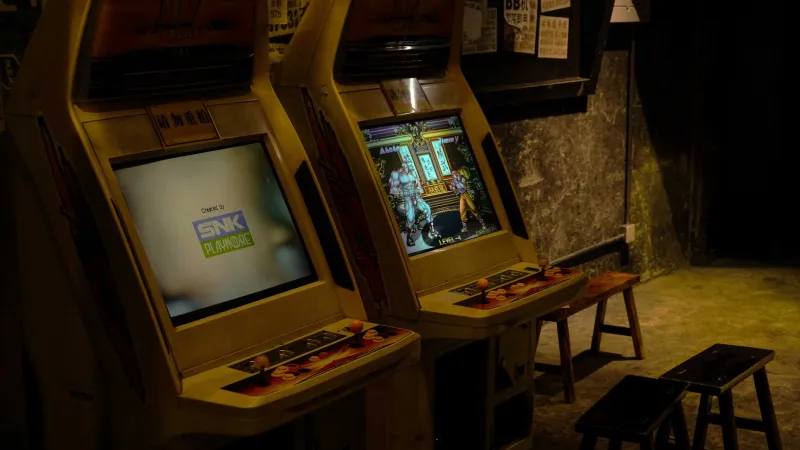
Picture a mall in 1983. A kid is dragging his mom past the food court, past the Orange Julius, past the record store. And then something catches his eye: a cabinet across the walkway is playing itself. The ship swoops. The boss looms. Explosions bloom across the screen in colors the Atari at home can't touch. Nobody is touching the controls. The machine is auditioning.
That was the attract mode — and it might be the most underrated piece of game design ever committed to silicon.
A Machine That Had to Sell Itself
Here's the thing modern players forget: arcade games didn't come with marketing budgets. There were no launch trailers, no influencer unboxings, no E3 stage demos. A cabinet got rolled into a pizza shop in Ohio or a boardwalk arcade in Jersey, plugged in, and left to fend for itself.
So developers built a salesman into the machine. When nobody was playing, the game would cycle through a scripted sequence — gameplay footage, character intros, high-score tables, flashing "INSERT COIN" text — designed to do one thing: stop a stranger in their tracks and get a quarter out of their pocket.
And the clock was brutal. Behavioral studies of attention in retail spaces suggest you've got a handful of seconds to hook someone walking by. A kid rounding the corner at a Showbiz Pizza wasn't going to stand there for a minute. The attract mode had roughly the lifespan of a red light to make its case.
The Craft Hiding in the Loop
Watch a great attract mode from the era — really watch it — and you'll notice it isn't just gameplay footage slapped on a loop. It's edited like a commercial.
Designers made deliberate, almost ruthless choices. They showed the flashiest moments, not the grind. Enemy waves appeared in choreographed waves because chaos reads as excitement. High-score screens rotated through constantly, because nothing hooks a competitive kid like seeing "JIM — 482,930" and thinking I could beat that.
Some games went further. Fighting titles introduced their roster character by character, giving each fighter a name and a pose like wrestlers making an entrance. Racing games ran ghost replays of perfect laps. The best attract modes told a micro-story: here's the world, here's the danger, here's how cool you'll look mastering it.
There's a psychology angle that's hard to miss, too. The demo mode lowered the stakes of trying. You'd already seen the game played — badly, sometimes, by the machine itself — so walking up felt less like a test and more like joining something already in progress. That's a friction-killer, and friction-killing is the holy grail of every funnel in modern marketing.
Why the Art Died
The attract mode didn't vanish because it stopped working. It vanished because the economics changed.
Once games moved to consoles and PCs, the person buying the game was already standing at the register. There was no passerby to convert. Marketing moved to magazine ads, TV spots, and eventually storefronts full of screenshots and reviews. The demo became a download — a playable slice you got at home, on your own time, with your own bandwidth.
And honestly? Something got lost in that trade. A downloadable demo is passive; you seek it out. An attract mode was ambush marketing — it found you, in a hallway you were already walking down, and made the case in real time. It was advertising that doubled as entertainment, and it worked on you before you were old enough to be skeptical of advertising.
Modern digital storefronts have tried to recreate the effect — autoplay trailers on Steam, TikTok clips, that one screenshot that's clearly a render and not gameplay. But most of it is noise. The attract mode worked because it was constrained. Eight seconds. One loop. No sound budget for a narrator telling you the game has "stunning visuals." The machine just showed you the good part, over and over, until you paid.
What Today's Marketers Could Learn From a Cabinet
There's a lesson buried in those looping demos, and it's one the app-store era keeps relearning the hard way: show, don't describe.
The attract mode never told you the game was fun. It demonstrated the fun, at full volume, with no copy deck. Compare that to a modern mobile ad that's 70 percent UI screenshots and a voiceover reading feature bullet points. The old cabinets understood that a kid in a mall doesn't want features — they want to picture themselves at the controls.
The other lesson is repetition without fatigue. A great attract loop could run for hours and still pull people in on the hundredth pass, because it was built as a loop, not a video. There's a design discipline in that — crafting a hook that survives being seen a thousand times — and almost nobody in modern marketing thinks in those terms anymore.
The Loop Lives On
Here's the kicker: the attract mode never really died. It just changed clothes. The autoplay clip on your feed, the demo kiosk at a Best Buy, the free-to-play first level of a mobile game — they're all descendants of that looping cabinet in the mall, quietly playing itself and waiting for a quarter.
Next time a demo reel stops your scroll, tip your hat to the designers who figured it out first, with less memory than a modern fridge and no second chances. They had eight seconds and a flashing screen.
Turns out, that was plenty.