Vanishing Acts: Tracing the Disappearance of Arcade Machines from America's Public Spaces
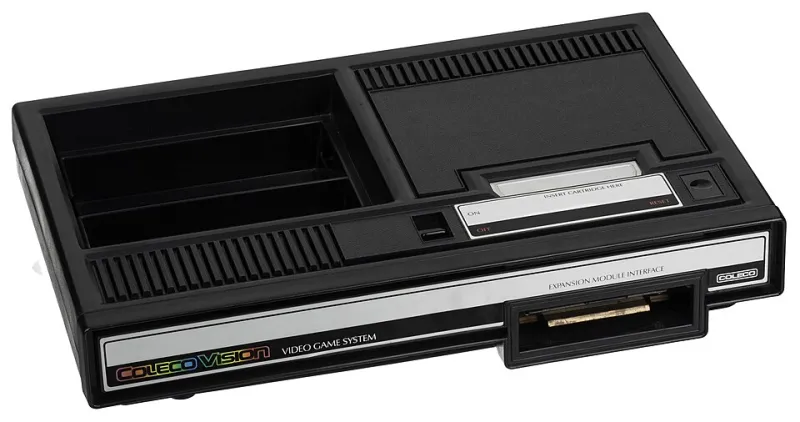
Photo: Evan-Amos, Public domain, via Wikimedia Commons
Somewhere between 2003 and 2010, a silent evacuation happened across the United States. It didn't make headlines. Nobody held a press conference. But if you were paying attention — really paying attention — you noticed it. The corner of the bowling alley that used to glow with cabinet screens went dark. The lobby of the movie theater stopped humming with joystick noise. The back room at the pizza place got repurposed into a storage closet or a party overflow space. The arcade machines were gone.
Not all at once, and not from everywhere. But steadily, methodically, the cabinets disappeared from American public life like a slow tide pulling back from the shore. At 125520 Arcade, we wanted to understand exactly how that happened — and whether what's quietly emerging in certain markets right now is a genuine reversal or just wishful thinking.
The First Dominoes: Which Venues Bailed First
If you want to understand the arcade exodus, start with the economics of floor space. Arcade cabinets aren't cheap to maintain. They break down, they need parts, and they require a dedicated relationship with a route operator — the middleman company that stocks, services, and splits revenue with the venue. When that revenue-per-square-foot calculation stopped making sense, venues made a business decision. Simple as that.
Movie theaters were among the first to pull back, and it's not hard to see why. By the mid-2000s, multiplex lobbies were getting redesigned with premium concession bars and expanded snack footprints. A Street Fighter cabinet generating maybe forty dollars a week couldn't compete with a popcorn station turning three times that. Theater chains quietly let their operator contracts lapse and reclaimed the floor space.
Bowling alleys held on longer, partly because the demographic overlap between bowlers and arcade players was genuinely strong. Families with kids, groups of friends, date nights — these people were already in a mood to spend money on entertainment. But even bowling alleys started trimming their game rooms through the late 2000s and into the 2010s, especially after the recession hit and discretionary spending tightened across the board.
Family restaurants — your Chuck E. Cheese competitors, your regional pizza chains — were the most complicated case. Some doubled down on the arcade model and survived. Others stripped out the games entirely and tried to reposition as casual dining. The ones that pulled the machines and didn't replace them with anything compelling tended to struggle.
The Route Operator Collapse Nobody Talked About
Here's the part of the story that doesn't get enough attention: the disappearance of arcade machines from public venues wasn't just driven by the venues themselves. It was also driven by the collapse of the route operator industry.
Route operators are the unsung infrastructure of the American arcade economy. They own the machines, place them in venues under revenue-sharing agreements, and handle all the maintenance. At the industry's peak, there were thousands of small and mid-sized operators running routes across every state. By the early 2010s, that number had cratered.
The reasons were layered. Parts for aging cabinets became harder to source. The manufacturers who'd built those machines — Midway, Atari, Namco's U.S. operations — had either exited the market or dramatically scaled back. New cabinet releases slowed to a trickle. Without fresh games to rotate into venues, operators had trouble justifying the overhead of maintaining a route. Many simply wound down.
When a route operator closed up shop, every venue on their circuit lost access to machines overnight. Some venues tried to find replacement operators. Others just moved on. The infrastructure that had sustained the physical arcade presence in American public spaces quietly dissolved.
What the Data Actually Shows
Precise national numbers on arcade cabinet placement are hard to come by — the industry was never great at centralized data collection — but regional snapshots tell a consistent story. Industry trade groups estimated that the number of locations operating arcade games in the U.S. dropped by somewhere between 60 and 80 percent between 1998 and 2015. The machines didn't just move; they largely ceased to exist in accessible public settings.
A lot of them ended up in storage. Some got scrapped. A meaningful number made their way into the collector market, which is why vintage cabinet prices have climbed so sharply over the past decade. Others were converted to home use — the dedicated hobbyists who started building out basement game rooms in the 2010s absorbed a significant chunk of displaced commercial inventory.
The venues that survived with active game rooms tended to share a few characteristics: high foot traffic, a family-oriented customer base, and an operator relationship that kept the cabinet selection reasonably fresh. Dave & Buster's, which expanded aggressively through this period, essentially proved that the model could work at scale if you engineered the whole experience around it rather than treating games as an afterthought.
The Quiet Restocking: Who's Bringing Machines Back
Here's where the story gets interesting. Starting around 2018 and accelerating after the pandemic-era reopening scramble, a distinct pattern has emerged in certain markets: venue owners are actively restocking arcade games — not as nostalgia bait, but as calculated traffic drivers.
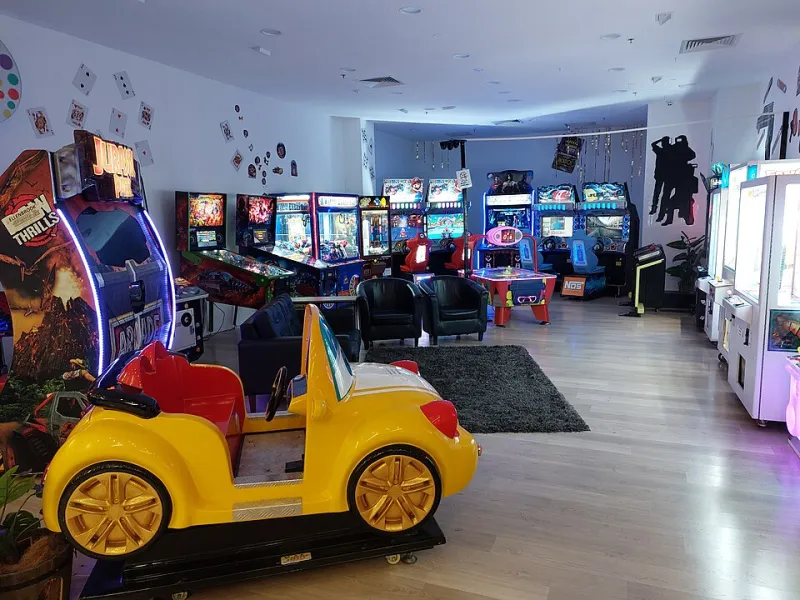
Bar arcades have been the most visible expression of this trend, and their growth in cities like Austin, Chicago, Nashville, and Portland has been well-documented. But the more surprising development is happening in less obvious venues. Independent movie theaters, facing existential pressure from streaming, have started experimenting with game rooms as a way to extend dwell time and capture revenue from customers who arrive early or linger after a showing. A few regional bowling chains have rebuilt their game rooms from scratch, investing in newer redemption-style cabinets that tend to generate stronger per-play revenue than traditional arcade games.
Even some full-service restaurants have quietly added small game corners — not the sprawling game rooms of the 1990s, but curated clusters of four or six machines positioned near the bar or the waiting area. The logic is straightforward: anything that keeps customers engaged and on-premises while they wait for a table is a net positive.
Venue owners who've made these moves tend to describe a similar calculus. The upfront cost of leasing or purchasing cabinets is offset by the incremental spend those games generate, plus the intangible benefit of giving customers a reason to stay longer. "People pull out their phones to take videos of the machines and post them," one Midwest bowling alley owner told us. "That's marketing I'm not paying for."
Can the Comeback Actually Stick?
The honest answer is: in some places, yes. In others, probably not.
The venues most likely to sustain a meaningful arcade presence are the ones treating it as a core part of their entertainment offering rather than a decoration. That means investing in machine maintenance, rotating titles periodically, and positioning the game room in a way that makes it feel intentional rather than incidental.
The venues least likely to succeed are the ones dropping a couple of machines in a corner and hoping for the best. Customers can tell the difference between a curated experience and an afterthought. So can the operators who service those machines.
What's clear is that the geography of American arcade culture has permanently shifted. The era of the standalone arcade — the dedicated storefront that existed solely to house games — is unlikely to come back in any widespread way. But the embedded arcade, the game room that lives inside another kind of venue and earns its keep as part of a broader entertainment mix, has real staying power.
The machines didn't disappear because people stopped wanting to play them. They disappeared because the business infrastructure around them collapsed. Rebuilding that infrastructure, even partially, is what the current wave of venue owners is quietly attempting. Whether it works will depend less on nostalgia and more on whether the numbers pencil out — which, in the right hands, they increasingly seem to do.